

Compression Stockings: Benefits for Lymphedema and Circulation

Introduction to Compression Stockings
Compression stockings are specialized hosiery designed to help prevent the occurrence of, and guard against, further progression of venous disorders. Unlike regular socks, these medical-grade garments apply a specific amount of pressure to your legs, known as graduated compression. This means the pressure is tightest at the ankle and gradually decreases as it moves up the leg, encouraging blood to flow upward against gravity. 🦵
These stockings are primarily used to manage conditions like lymphedema and poor circulation, which can cause discomfort and health risks. For people suffering from chronic venous insufficiency or lymphatic blockage, these stockings act as a supportive layer that mimics the natural pumping action of muscles. By squeezing the leg tissues and walls of the veins, they help move blood and lymph fluid back toward the heart, reducing swelling and heaviness.
Historically, compression therapy has been a cornerstone of medical treatment for leg health, evolving from simple bandages to the sophisticated garments we see today. Doctors and specialists, such as those at https://www.thenaturedoctors.ca, frequently recommend them because they are a non-invasive and highly effective solution. As a result, they have become a standard daily tool for millions of people looking to maintain healthy legs and manage chronic conditions.
What Are Compression Stockings and How Do They Work?
The secret behind the effectiveness of compression stockings lies in their graduated design, which is measured in millimeters of mercury (mmHg). They come in various pressure levels, ranging from mild support (10-20 mmHg) to medical-grade firmness (20-30 mmHg and higher), depending on the severity of the condition. This engineered pressure gradient ensures that the veins near the ankle receive the most support, preventing blood from pooling at the bottom of the foot. 📉
Physiologically, this pressure has a profound effect on both the venous and lymphatic systems. When the stockings compress the surface veins, arteries, and muscles, they force circulating blood through narrower channels, which increases arterial pressure and causes more blood to return to the heart. Simultaneously, this external pressure helps the lymphatic system absorb and transport fluid more efficiently, preventing the stagnation that leads to uncomfortable swelling.
Key Benefits for Improving Circulation
Enhancing Venous Blood Flow
One of the biggest challenges for our circulatory system is fighting gravity to push blood from our feet back up to our chest. Compression stockings provide the necessary squeeze to prevent blood from pooling in the lower legs, a condition that often leads to varicose veins and spider veins. By narrowing the diameter of the veins, the velocity of blood flow increases, ensuring a smooth and efficient return trip to the heart. ❤️
Furthermore, these stockings support the "calf muscle pump," which is the body's natural mechanism for moving blood when we walk. Research has shown that wearing compression garments reduces residual venous volume, meaning less blood is left behind in the leg after a muscle contraction. This improved efficiency not only prevents the feeling of heavy, tired legs but also significantly lowers the risk of developing blood clots.
Reducing Swelling and Edema
Edema, or swelling caused by excess fluid trapped in your body's tissues, is a common issue that compression stockings are uniquely equipped to handle. By applying consistent pressure, the stockings prevent fluid from leaking out of small blood vessels into the surrounding tissue. For those already experiencing swelling, the pressure helps massage the fluid back into the circulatory system so it can be processed and eliminated by the kidneys.
"Graduated compression stockings provide the most pressure at the ankles, helping push blood back to the heart and enhancing vascular health." -Michigan Vascular Center
Interestingly, you don't have to have a medical condition to benefit from the swelling reduction these stockings provide. Healthy individuals who stand or sit for long periods—such as nurses, teachers, or office workers—often experience occupational edema by the end of the day. Wearing mild compression stockings can prevent this daily fluid buildup, keeping legs feeling energized and light from morning until night. 🏃♀️
Compression Stockings for Lymphedema Management
Lymphedema is a chronic condition characterized by swelling, usually in the arms or legs, caused by a blockage or damage to the lymphatic system. This can occur due to genetic factors, infection, or frequently as a side effect of cancer treatments like surgery or radiation. Without proper management, the protein-rich lymph fluid builds up in the tissues, leading to significant swelling, skin changes, and an increased risk of infection.
Compression stockings are considered the "gold standard" for managing this condition because they limit the space available for fluid to accumulate. By applying external resistance, the stockings compensate for the loss of skin elasticity that often accompanies significant swelling. This pressure encourages the lymph fluid to move out of the affected limb and drain into healthy lymph nodes, effectively keeping the limb size under control.
Whether a patient is dealing with primary lymphedema (present at birth) or secondary lymphedema (acquired later), the goal remains the same: maintenance and reduction. While compression garments cannot fix the damaged lymph vessels, they are incredibly effective at maintaining the results achieved through manual drainage therapy. Consequently, consistent wear is crucial for preventing the condition from worsening over time.
Who Should Consider Wearing Compression Stockings?
A wide variety of people can benefit from compression therapy, making it a versatile tool for health and wellness. Ideal candidates include those with diagnosed venous insufficiency, lymphedema, or varicose veins, as well as pregnant women who want to prevent swelling and leg cramps. Additionally, travelers taking long flights and athletes looking to improve recovery times often use them to boost circulation. If you fall into these categories, visiting a clinic like https://www.thenaturedoctors.ca can help you determine the best options for your lifestyle.
"Compression of the lower legs is an effective way to improve blood flow. It can reduce pain and swelling associated with poor circulation." -Cleveland Clinic
However, compression stockings are not suitable for everyone, and there are important contraindications to be aware of. Individuals with severe peripheral artery disease (PAD) should generally avoid them, as the compression can cut off already limited blood flow to the legs. It is also important to consult a doctor if you have skin infections, uncontrolled congestive heart failure, or severe nerve damage, ensuring that the stockings do more good than harm. ⚠️
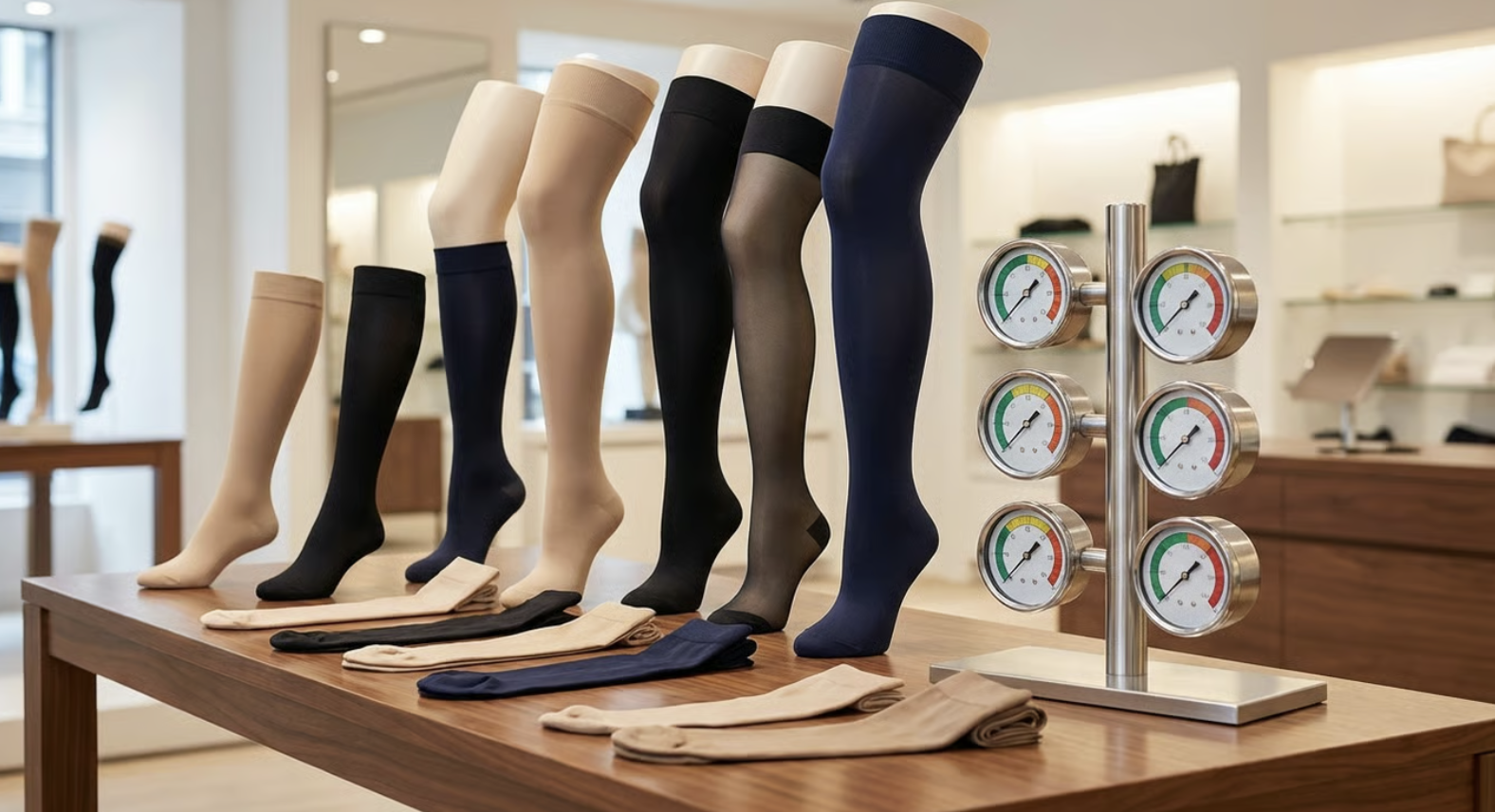
Types and Pressure Levels of Compression Stockings
Knee-High vs. Thigh-High Options
When selecting compression garments, the length of the stocking is a primary consideration based on where the swelling or vein issues are located. Knee-high stockings are the most common and are generally sufficient for preventing ankle swelling, managing varicose veins in the lower leg, and improving general circulation. They are often easier to put on and more comfortable for daily wear, making compliance higher for many patients.
On the other hand, thigh-high stockings or full pantyhose are necessary when the condition affects the area above the knee. For lymphedema that extends into the thigh or for preventing blood clots after hip surgery, full-leg coverage is essential to ensure fluid isn't just pushed from the calf to the thigh. Choosing the correct length ensures that the fluid is effectively moved out of the entire limb rather than just shifting the problem upward.
Choosing the Right Compression Class
Compression levels are categorized into classes, starting with mild, over-the-counter options and moving up to prescription-strength firmness. Class 1 (15-20 mmHg) is great for travel and minor swelling, while Class 2 (20-30 mmHg) is the standard medical grade for varicose veins and mild lymphedema. Higher classes (30-40 mmHg and above) provide very firm support and are typically reserved for severe lymphedema or chronic venous ulcers.
Selecting the correct pressure is critical because evidence suggests that higher compression is often needed for effective lymphatic pumping. Studies indicate that pressures in the range of 20-30 mmHg or higher are superior for reducing limb volume in lymphedema patients compared to lighter support. Therefore, getting a professional fitting is vital to ensure the pressure is therapeutic without being intolerably tight.
"Compression socks can help reduce swelling and prevent attacks of cellulitis (a bacterial skin infection) for people with this condition, in which lymphatic fluid... doesn’t drain properly in the legs." -Yale Medicine
How to Wear and Care for Compression Stockings
Putting on compression stockings can be a bit of a workout, but using the proper technique makes it much easier. It is best to put them on first thing in the morning when your legs are least swollen. Turn the stocking inside out down to the heel, slide your foot in, and then gradually roll the fabric up your leg, smoothing out any wrinkles as you go. 🕰️
Sizing is perhaps the most critical factor; a stocking that is too tight can act as a tourniquet, while one that is too loose provides no medical benefit. Measurements should be taken at the ankle, calf, and thigh to ensure a precise fit. Common mistakes include folding the top of the stocking down, which can restrict blood flow, or pulling them up too high, which can cause rolling and discomfort.
To maintain their elasticity and effectiveness, compression stockings require specific care. They should be washed daily or after every wear to remove sweat and skin oils that can break down the fibers. Hand washing with mild soap and air drying is usually recommended, and because the elastic wears out over time, experts suggest replacing your stockings every 3 to 6 months to ensure they maintain the correct pressure profile.
Scientific Evidence and Studies
The medical community backs the use of compression stockings with robust scientific evidence, particularly regarding their impact on lymph dynamics. Randomized controlled trials have demonstrated that wearing these garments significantly increases "lymph pumping pressure," which helps move fluid out of swollen limbs. Furthermore, patients in these studies consistently report improvements in their Quality of Life (QOL), citing less pain and greater mobility.
Beyond lymphedema, the data on circulation is equally compelling. Studies have proven that compression stockings are highly effective in preventing Deep Vein Thrombosis (DVT) in high-risk patients, such as those recovering from surgery. Research also tracks objective metrics like the reduction of limb circumference, confirming that consistent wear leads to measurable decreases in edema and better overall vascular health.
"At 16 weeks, both Stockings A and B resulted in significantly elevated leg P_lp, with the effect on elevating P_lp being superior for Stocking A." -PMC (PubMed Central)

Potential Side Effects and Precautions
While generally safe, wearing compression stockings can come with some minor side effects, especially if the fit isn't perfect. Common complaints include skin irritation, itching, and dryness, particularly in the winter months. Some people also find them difficult to put on, which can be frustrating and may lead to inconsistent use, reducing their overall effectiveness.
More serious risks arise if the stockings are worn incorrectly or by the wrong candidates. If a stocking is wrinkled or rolled down, it can create a "tourniquet effect," cutting off circulation and potentially causing skin damage or sores. It is crucial to monitor your legs for any changes in skin color, sensation, or temperature, and to seek immediate medical advice if you experience numbness or increased pain.
Combining Compression with Other Therapies
Compression stockings are rarely used in isolation; they are most effective when part of a broader treatment strategy. For lymphedema and circulation issues, combining compression with regular exercise activates the calf muscle pump, maximizing the movement of fluid. Additionally, elevating the legs when resting and undergoing Manual Lymphatic Drainage (MLD) massage can significantly boost the results.
Creating a comprehensive treatment plan often requires the guidance of healthcare professionals who understand the interplay of these therapies. Clinics like https://www.thenaturedoctors.ca specialize in integrating these approaches to optimize patient outcomes. By viewing compression as one pillar of a holistic plan, patients can achieve long-term management of their condition rather than just temporary relief.
Conclusion
In summary, compression stockings are a powerful tool for managing lymphedema and improving overall circulation. By applying graduated pressure, they assist the veins and lymphatic vessels in moving fluid efficiently, reducing swelling, and preventing complications like blood clots. Whether you are dealing with a chronic condition or simply want to prevent tired legs after a long day of work, these garments offer a non-invasive and scientifically backed solution.
The key takeaways for success involve choosing the right pressure level, ensuring a proper fit, and committing to consistent daily wear. It is not enough to simply buy a pair; you must care for them properly and replace them regularly to maintain their therapeutic benefits. Furthermore, working with specialists ensures that you are using the correct type of stocking for your specific health needs.
If you are struggling with leg swelling, heaviness, or lymphedema, don't wait for the symptoms to worsen. Consult your healthcare provider to get fitted for medical-grade compression stockings today and experience relief from swelling and improved circulation—take the first step toward better leg health.
Frequently Asked Questions (FAQ)
How long should I wear compression stockings each day?
For most conditions involving circulation or lymphedema, it is recommended to wear compression stockings from the moment you wake up until you go to bed. Putting them on before you get out of bed prevents gravity from causing swelling to start. However, you should generally take them off while sleeping unless your doctor has specifically instructed otherwise.
Can anyone wear compression stockings?
While most people can safely wear mild compression socks, they are not suitable for everyone. People with severe peripheral artery disease (PAD), advanced peripheral neuropathy, or certain skin infections should avoid them. It is always best to consult with a healthcare professional to ensure there are no contraindications for your specific health situation.
Are over-the-counter compression socks as effective as prescription ones?
Over-the-counter (OTC) compression socks typically offer mild pressure (15-20 mmHg) and are effective for minor swelling, travel, or tired legs. However, for medical conditions like lymphedema or chronic venous insufficiency, prescription-grade stockings (20-30 mmHg or higher) are usually required to provide the therapeutic pressure needed to manage the condition effectively.
How do I know what compression level I need?
Determining the right compression level depends on the severity of your symptoms and the underlying cause. Mild swelling may only need Class 1 support, while lymphedema usually requires Class 2 or 3. The best way to know for sure is to have a professional assessment and fitting by a doctor or a certified fitter who can measure your legs and prescribe the appropriate class.
Will compression stockings cure lymphedema?
Compression stockings are a management tool, not a cure. Lymphedema is a chronic condition that currently has no permanent cure. However, wearing compression stockings consistently is one of the most effective ways to control swelling, prevent the condition from progressing, and maintain a high quality of life.