

Ultrasound Therapy: Accelerating Soft Tissue Healing
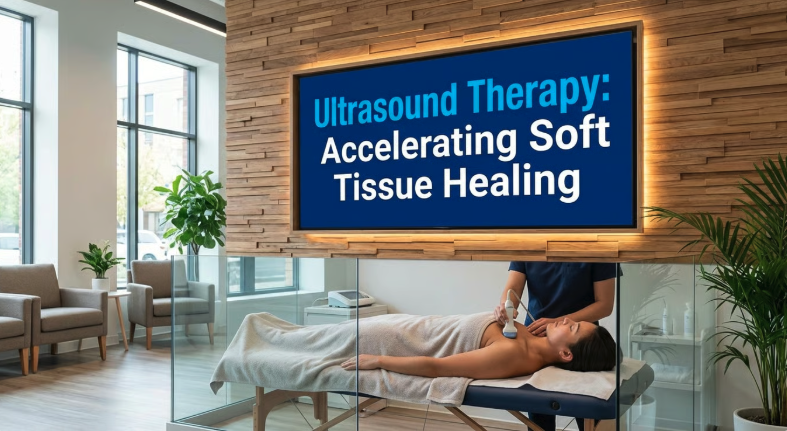
Introduction to Ultrasound Therapy
Therapeutic ultrasound is a popular, non-invasive treatment that uses high-frequency sound waves to penetrate deep into the body's soft tissues. Unlike the ultrasound used for imaging babies during pregnancy, this type of therapy is designed specifically to help your body heal from injuries. It is a staple tool in many physical therapy and chiropractic clinics, offering a gentle yet effective way to manage pain and support recovery from various musculoskeletal issues. 🩺
The primary role of this therapy is to accelerate soft tissue healing by "waking up" your body's natural repair processes. By delivering energy directly to the injured area, it helps tissues recover faster than they might on their own. The use of sound waves for healing isn't new; it has a long history in medicine, evolving over decades to become a trusted method for treating muscle, tendon, and ligament problems. 📜
In this article, we will explore exactly how this technology works and why it is so effective for injury recovery. We will cover the science behind the sound waves, the specific benefits for your body, and the types of conditions that respond best to treatment. By the end, you will have a clear understanding of how ultrasound therapy can be a game-changer for your physical health. 🚀
What Is Therapeutic Ultrasound?
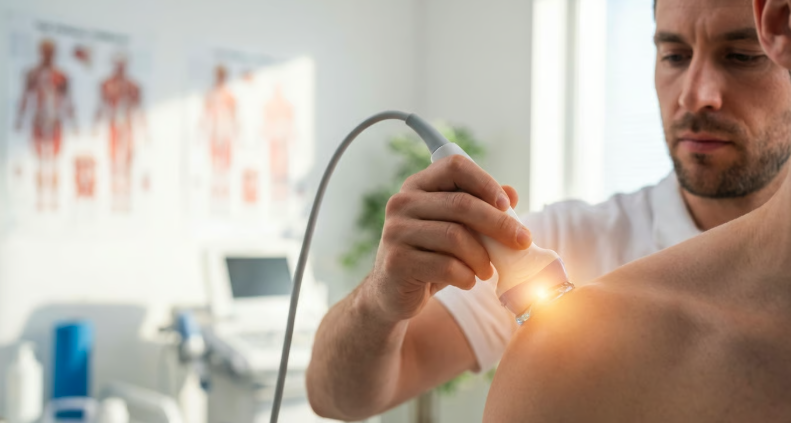
Therapeutic ultrasound involves a specialized machine that generates sound waves that are too high in pitch for the human ear to hear. These waves are delivered through a handheld device, often called a transducer or wand, which is moved over your skin. As the sound waves travel into your body, they create tiny micro-vibrations and generate heat deep within your muscles and connective tissues. 🌡️
There are different types of ultrasound, but Low-Intensity Therapeutic Ultrasound (LITUS) is widely used for promoting healing without causing damage. Unlike surgery or injections, this method is completely non-invasive, meaning it doesn't break the skin. Most patients report feeling nothing more than a soothing, warm sensation as the wand glides over the injured area, making it a comfortable and stress-free experience. 😌
How Does Ultrasound Therapy Work?
The magic of ultrasound therapy lies in the mechanical energy produced by the sound waves. When the device is applied to your skin, it sends vibrations deep into the tissue, which causes the molecules inside to vibrate as well. This friction creates heat energy, which significantly increases blood flow to the area, delivering a fresh supply of oxygen and nutrients that are vital for repairing damaged tissues. 🩸
Beyond just heat, these sound waves affect the activity of your cells to speed up the healing timeline. The vibrations influence cell metabolism and improve the transport of essential chemicals across cell membranes, which acts like a "jump start" for the healing process. This cellular stimulation also helps organize collagen fibers as they repair, which is crucial for preventing the formation of messy, restrictive scar tissue. 🧱
Therapists often talk about two main effects: thermal and non-thermal. The thermal effect warms the tissue to relax muscles and increase elasticity, while the non-thermal effect uses the physical force of the waves to reduce swelling and encourage tissue regeneration. Together, these mechanisms work to align tissue fibers correctly, ensuring that your muscles and ligaments heal strongly and flexibly. 💪
"Therapeutic ultrasound is a treatment that uses sound waves—not audible to the human ear—to penetrate deep into soft tissues. These waves help stimulate blood flow, loosen tight muscles, and break up scar tissue." -Logan Chiropractic Health Center
Benefits of Ultrasound for Soft Tissue Healing
One of the most significant benefits of ultrasound therapy is its ability to boost circulation and drastically reduce inflammation. When an injury occurs, swelling can sometimes block the flow of healing nutrients, slowing down recovery. By increasing blood flow to the site of the injury, ultrasound helps flush out inflammatory chemicals and brings in the "building blocks" needed to repair the damage more quickly. 🩹
In addition to healing, this therapy provides excellent relief for tight, painful muscles. The deep heat generated by the sound waves helps to relax muscle spasms and soothe nerve endings, providing immediate pain relief. Furthermore, the mechanical vibrations are effective at breaking down adhesions—tough spots of internal scarring—allowing your muscles to glide smoothly again. 🧘
Patients also experience significant improvements in their range of motion and overall tissue strength. Injuries often lead to stiffness because the new tissue that forms can be tight and inflexible. Ultrasound therapy helps keep the tissues pliable and elastic during the healing process, preventing that "stuck" feeling and ensuring you can move freely once you are fully recovered. 🏃♂️
Finally, there is strong evidence supporting the outcome of faster recovery times for various soft tissue injuries. Whether you are dealing with a torn ligament, a strained muscle, or tendonitis, ultrasound has been shown to speed up the biological clock of healing. This means you can get back to your daily activities or sports much sooner than with rest alone. ⏱️
"When tissue is exposed to ultrasound, the sound waves cause a micro-vibration within the tissue. This vibration creates heat energy that increases blood flow to the area." -The Physiotherapy Place
Scientific Evidence Supporting Ultrasound Therapy
Research into Low-Intensity Therapeutic Ultrasound (LITUS) has consistently shown positive results for treating injuries to tendons, ligaments, and muscles. Studies indicate that the treatment improves the tensile strength of the healing tissue, meaning the repaired area is less likely to re-injure. Furthermore, the sound waves help align collagen fibers in a neat, parallel pattern, which makes the tissue stronger and more functional. 🔬
Human clinical trials have also demonstrated impressive results regarding pain management. Some studies suggest that patients receiving ultrasound therapy can experience pain reduction of up to 70% compared to those who do not use it. This reduction in pain often leads to better biomechanics, as patients are able to move more naturally without compensating for the injury. 📉
Post-operative recovery is another area where ultrasound shines, particularly in tendon-bone healing. Scientific reviews highlight that ultrasound can stimulate bone formation and help soft tissues attach more securely to the bone after surgery. This evidence suggests that including ultrasound in a post-surgical rehabilitation plan can significantly improve long-term outcomes. 🏥
Common Conditions Treated with Ultrasound Therapy
Ultrasound therapy is a versatile tool used to treat a wide variety of acute injuries. It is highly effective for common problems like ankle sprains, muscle strains, and various forms of tendonitis, including tennis elbow (epicondylitis). It is also frequently prescribed for plantar fasciitis, helping to soothe the inflamed tissue on the bottom of the foot. 🦶
"Scientific evidence supports the use of LITUS to treat soft tissue injuries, and improve outcomes for musculoskeletal injuries and post-operative recovery." -PMC (Low Intensity Ultrasound for Promoting Soft Tissue Healing)
Beyond fresh injuries, it is excellent for managing chronic conditions that just won't go away. If you suffer from recurring muscle spasms, joint stiffness, or "frozen shoulder," ultrasound can help loosen things up. It is also a go-to therapy for breaking up scar tissue after surgery, ensuring that the surgical site remains flexible and pain-free. 🔄
The Treatment Process: What to Expect
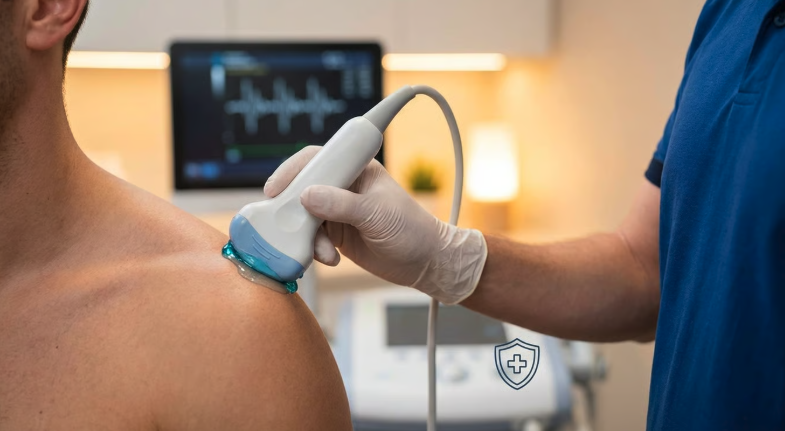
When you go for a session, perhaps at a clinic like The Nature Doctors, the process is simple and painless. The therapist will first apply a conductive gel to your skin; this gel is necessary because sound waves struggle to travel through air. Once the gel is applied, the therapist will place the handheld device on your skin and move it in slow, circular motions to ensure even distribution of the waves. 🧴
A typical session is quite short, usually lasting between 5 to 10 minutes per injured area. The frequency of your visits will depend on your injury, but it is common to have treatments daily or three times a week initially. During the treatment, you likely won't feel the sound waves themselves, but you may feel a pleasant, deep warmth in the area being treated. 🕰️
Ultrasound is rarely used as a standalone cure; it works best when integrated with other therapies. Your chiropractor or physical therapist will likely combine it with manual adjustments, stretching, or strengthening exercises. This comprehensive approach ensures that while the ultrasound heals the tissue, the exercises restore function and strength. 🤸♀️
"According to a 2016 study published in the Internal Medicine Review, low-intensity ultrasound therapy is effective in promoting soft tissue healing following injuries to ligaments, tendons, skeletal muscles and the tendon-bone junction." -Northeast Spine and Sports Medicine
Safety and Side Effects of Ultrasound Therapy
One of the best things about ultrasound therapy is its safety profile. It is a non-invasive procedure, meaning there are no needles or incisions, and it carries very minimal risks when performed by a trained professional. For the vast majority of patients, it is a safe way to accelerate healing without the side effects associated with pain medication. ✅
However, there are a few situations where ultrasound should not be used, known as contraindications. It should not be applied over active tumors, infections, or areas with metal implants like pacemakers. Side effects are extremely rare, but occasionally a patient might feel a slight irritation or too much warmth if the wand is held in one spot for too long, which is why the therapist keeps it moving. ⚠️
Ultrasound Therapy vs. Other Healing Modalities
When compared to simple home remedies like heating pads or ice packs, ultrasound offers a distinct advantage: depth. While a hot pack only warms the surface of your skin, therapeutic ultrasound penetrates inches deep into the muscle and connective tissue. This allows it to treat the root of the problem rather than just masking the symptoms on the surface. 🧊🔥
It is also different from electrical stimulation (TENS) or laser therapy. While TENS focuses primarily on blocking pain signals to the brain, ultrasound focuses on physical tissue repair through sound energy. Laser therapy uses light to heal, which is also effective, but ultrasound is unique in its ability to create mechanical vibrations that physically loosen tight tissues. ⚡
"After six weeks of LITUS treatment, ligaments were 39.5% stronger, 24.5% stiffer, could absorb 69.1% more energy, and were 10.6% larger than sham-treated ligaments." -PMC (Low Intensity Ultrasound for Promoting Soft Tissue Healing)
For the best results, many experts recommend a combined approach. Using ultrasound to heat and relax the deep tissue makes it easier to perform physical therapy exercises afterward. By mixing different modalities, you can attack the injury from multiple angles, leading to a faster and more complete recovery. 🧩
When to Start Ultrasound Therapy for Best Results
Timing is everything when it comes to healing soft tissue injuries. For the maximum acceleration of healing, it is best to start ultrasound therapy within the first two weeks following an injury. This "acute phase" is when your body is working hardest to repair damage, and the extra energy from the ultrasound can give your cells the boost they need to organize tissue correctly from the start. 🗓️
However, it is never too late to start, especially for chronic issues. If you have an old injury that still bothers you or stiffness that returns periodically, ultrasound can still be very effective. Maintenance sessions can help manage long-term conditions, keeping tissues flexible and preventing old scar tissue from causing new problems. 🔄
Conclusion
To recap, ultrasound therapy is a powerful, science-backed method for accelerating soft tissue healing. By using high-frequency sound waves, it penetrates deep below the skin to increase blood flow, reduce painful inflammation, and stimulate cellular repair. Whether through thermal heat or mechanical vibrations, this therapy helps align collagen fibers and prevents the buildup of restrictive scar tissue, ensuring a stronger and more flexible recovery. 🌟
Key Takeaways: Ultrasound therapy is a safe, non-invasive treatment that is proven to help tendons, ligaments, and muscles heal faster. It is most effective when started early after an injury but also provides relief for chronic conditions. If you are struggling with a soft tissue injury, consider consulting a professional. You can visit The Nature Doctors to explore how their ultrasound therapy services can accelerate your path to recovery. 📞
Remember that while ultrasound is a fantastic tool, it works best under the guidance of a healthcare professional who can tailor the treatment to your specific needs. Prioritize your health by seeking expert advice, and take the necessary steps to get your body back to feeling its best. Your road to a pain-free life starts with the right treatment plan. 🛣️
Frequently Asked Questions (FAQ)
How many sessions of ultrasound therapy are typically needed?
The number of sessions varies depending on the severity of your injury, but a standard protocol often lasts for 6 to 8 weeks. During this time, you might receive treatment 3 to 5 times per week initially, tapering off as your condition improves. Your therapist will adjust this schedule based on how your body responds. 📅
Is ultrasound therapy painful?
No, ultrasound therapy is generally very comfortable and should not cause pain. Most patients report feeling a gentle, soothing warmth in the area being treated, or sometimes nothing at all. If you ever feel sharp pain or intense heat, you should tell your therapist immediately so they can adjust the settings. 😌
Can ultrasound therapy be used at home?
Yes, there are portable Low-Intensity Therapeutic Ultrasound (LITUS) devices available for home use. However, it is crucial to use them under the guidance of a medical professional to ensure you are using the correct settings and technique. Professional devices used in clinics are typically more powerful and effective. 🏠
Who should avoid ultrasound therapy?
Certain individuals should avoid this therapy, particularly over specific areas of the body. It is contraindicated for pregnant women over the abdomen or lower back, people with malignancies (cancer), or those with acute infections. It should also not be used over areas with vascular abnormalities or active bleeding. 🚫
How soon can I expect results from ultrasound therapy?
Many patients begin to notice improvements in mobility and a reduction in swelling within the first 1 to 2 weeks of treatment. Significant pain reduction is often reported by the 6-week mark, according to various studies. Consistency with your appointments is key to seeing these results quickly. ⚡