

Gentle exercise for cancer fatigue can sound like a contradiction when you are already worn out, yet small, well-paced movement is one of the supportive steps the Canadian Cancer Society encourages. This post, part of our cancer support series, focuses on pacing: matching activity to the energy you actually have, rebuilding strength slowly and keeping going through a Winnipeg winter. It is supportive information for comfort, energy and daily function, alongside the treatment plan you have chosen.
Ready to talk it through? Book with Dr. Sara Korsunsky, ND, book online with Nature Doctors or call 204-943-6079.
Why does movement help when I am already tired?
For many people, regular light activity eases fatigue better than rest alone. The Canadian Cancer Society notes that many people worry exercise will make them more tired, yet regular daily activity such as a brisk walk can reduce fatigue. Cancer-related fatigue is different from ordinary tiredness and may not lift after a good night's sleep, which is why pacing matters more than pushing.
What does the research say about exercise and cancer-related fatigue?
Exercise has been shown to help people feel and function better during and after cancer treatment. In 2019, an international roundtable convened by the American College of Sports Medicine reviewed the research and published exercise guidelines for people living with and beyond cancer. It concluded that exercise is generally safe, that everyone should "avoid inactivity", and that regular aerobic exercise, resistance training or both can improve fatigue, anxiety, depressive symptoms, physical function and quality of life. Its suggested target for fatigue is about 30 minutes of moderate aerobic activity three times a week plus resistance training twice a week, built up gradually. These findings are about how you feel and function day to day.
How do I pace gentle exercise for cancer fatigue?
Plan by energy, not by the clock, and stop while you still have something left.
Use the talk test: move at a pace where you can speak in full sentences.
Stop early: finish when you feel you could still do a little more.
Split it up: the Canadian Cancer Society notes that 30 minutes can be split into three 10-minute sessions, and that some activity is better than none.
Check the next day: if you feel wiped out the day after, scale back next time.
Keep a simple log: minutes, what you did and an energy score from 0 to 10.
On heavy days, rest counts as part of the plan. Keep activity at a level where you do not feel dizzy, have chest pain or feel your heart racing.
How can I rebuild strength safely?
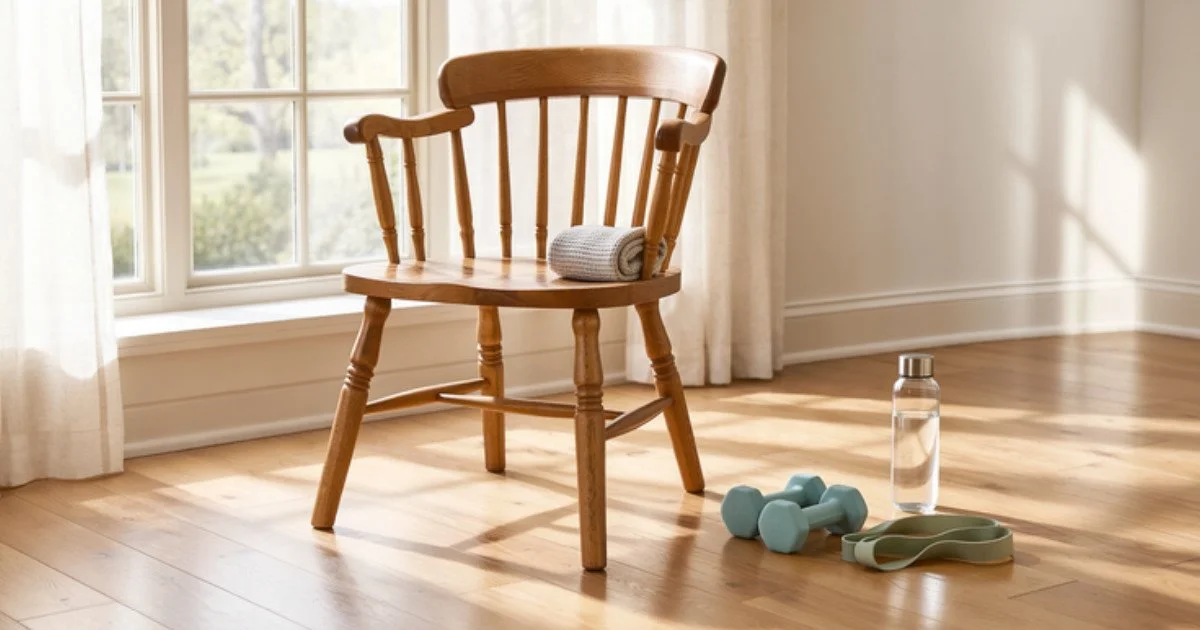
Start with body-weight moves and very light resistance, a few repetitions at a time. The Canadian Cancer Society gives arm curls and squats as examples. Simple ideas:
Sit-to-stand from a sturdy chair, five times
Wall push-ups
Heel raises while holding the back of a chair
Arm curls with a soup can or light hand weight
Seated rows with a light resistance band
Add one or two repetitions only when the current amount has felt easy for several sessions. If cancer involves your bones, or you have a port, a recent surgery or swelling in an arm or leg, some movements carry more risk, so plan these carefully with your naturopathic doctor before you begin.
What works in a Winnipeg winter?
Gentle exercise for cancer fatigue does not need to stop when the snow arrives. Indoor options keep you moving safely:
Walking loops at a mall, community centre or long hallway on the coldest days
Seated marching or arm circles during a favourite show
A five-minute stretch beside the bed in the morning
A few stair steps at home, holding the rail
Layers, good boots and cleared paths if you do head outside
How can Nature Doctors support your energy?
A naturopathic assessment looks at what else may be draining your energy, so movement is not the only lever. Through cancer support at Nature Doctors, Dr. Sara Korsunsky, ND looks at sleep, nutrition, stress and the supplements and teas you already take. Blood work can look at iron and ferritin, vitamin B12, thyroid function, blood sugar, inflammation and other nutrient levels, which can all affect how strong you feel, and functional lab testing can be added where it would be useful. Enough protein and fluids matter for rebuilding muscle; our post on eating well during cancer treatment has more.
Some supplements, herbs and other therapies can interact with cancer treatment, so Dr. Korsunsky reviews everything you take as part of a personalized plan. A simple written list of what you take, including anything prescribed, is all you need to bring.
Comfort supports can make moving easier: massage therapy with Jennifer Weidemann, RMT for muscle tension, and acupuncture with Juyin Lu, R.Ac. If sleep and stress are adding to fatigue, read our post on sleep, stress and emotional wellbeing during cancer treatment. Virtual naturopathic appointments are available across Manitoba.
Questions about this topic? Book with Dr. Sara Korsunsky, ND.
If you have a fever during cancer treatment, chest pain, trouble breathing, sudden weakness or a fall with injury, call 911 or go to the nearest emergency department right away.
Frequently asked questions
Should I exercise on a treatment day?
Follow your energy. A short walk or gentle stretch may feel good, and full rest is fine too.
How do I know I overdid it?
Feeling much more tired the next day, or soreness that lingers, means it is time to scale back.
Do I need a gym?
No. A sturdy chair, a resistance band and supportive shoes are enough to begin.
Can massage help me move more comfortably?
Many people use massage for muscle tension and comfort. Let your massage therapist know about your treatment.
Build back at your own pace
Gentle exercise for cancer fatigue works best as one part of a wider plan for your energy. Book with Dr. Sara Korsunsky, ND, book online with Nature Doctors, call 204-943-6079, or visit us at 7-1200 Waverley Street, Winnipeg.
Sources
Canadian Cancer Society, Being active: cancer.ca
Campbell KL et al. Exercise Guidelines for Cancer Survivors: Consensus Statement from International Multidisciplinary Roundtable. Medicine and Science in Sports and Exercise 2019: doi.org/10.1249/MSS.0000000000002116
Deep Healing Clinics